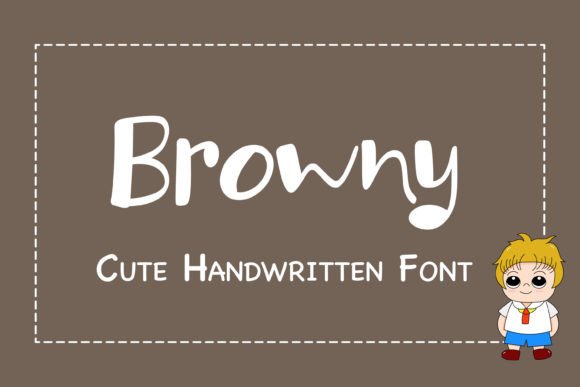
Browny: A Cute Handwritten Child Font for Creative Projects
The Browny font is a unique and decorative handwritten style designed specifically for children's creative projects. Its playful, jolly appearance adds a charming touch to any design that requires a soft, friendly aesthetic. This font is ideal for those looking to infuse their work with a sense of warmth and whimsy, making it a popular choice among designers, educators, and hobbyists alike.
One of the key features of Browny is its versatility. It can be used across a wide range of mediums, from printed materials to digital content. Whether you're creating educational resources, designing stationery, or working on a personal project, this font offers a distinctive look that stands out without being overwhelming.
Why Choose Browny?
For individuals interested in child-related designs, the Browny font provides an authentic, handcrafted feel that resonates with younger audiences. Its informal style makes it particularly well-suited for projects aimed at children, such as books, games, or classroom materials. The font's readability also makes it a practical choice for educational purposes, ensuring that text remains clear and engaging.
Another reason someone might consider using Browny is its ability to enhance the visual appeal of creative works. In a world where design often relies on sleek, modern fonts, Browny offers a refreshing alternative that feels more personal and expressive. This can be especially beneficial for artists, illustrators, or small businesses looking to differentiate their brand or product.
Benefits and Considerations
The primary benefit of using the Browny font is its ability to add a warm, inviting tone to any design. Its handwritten nature gives it a human touch, which can be particularly effective in marketing materials, greeting cards, or social media posts. Additionally, the font’s simplicity makes it easy to pair with other typefaces, allowing for greater flexibility in design layouts.
However, there are some considerations to keep in mind. While the font is highly readable in larger sizes, it may not be the best choice for long blocks of text. Its stylized letters can sometimes appear less legible when used in smaller formats, which could impact the overall effectiveness of the design. Users should also be aware of licensing terms, as some fonts may require specific permissions for commercial use.
Situations Where Browny Shines
Browny is particularly well-suited for projects that aim to evoke a sense of nostalgia or innocence. For example, it works well in children’s book illustrations, birthday invitations, or promotional materials for kid-friendly products. Its charm makes it a strong fit for branding that targets a younger demographic or emphasizes a handmade, personal approach.
In addition, the font is ideal for DIY enthusiasts who want to add a unique flair to their crafts. Whether it's customizing t-shirts, creating personalized greeting cards, or designing home decor items, Browny can help elevate the overall look and feel of the final product. Its adaptability across different formats makes it a valuable tool for those involved in creative or artistic pursuits.
When Alternatives May Be Better
While Browny is a great option for many projects, there may be situations where other fonts are more appropriate. For instance, if the goal is to create a professional or formal design, a more structured typeface might be a better choice. Similarly, for projects that require high levels of legibility, such as signage or technical documents, a simpler font could be more effective.
Users should also consider the context in which the font will be used. If the design is intended for a broad audience or needs to maintain a certain level of seriousness, the casual nature of Browny may not align with the desired tone. In such cases, exploring other options that match the project's goals would be advisable.
Decision-Making Insights
When deciding whether to use the Browny font, it's important to evaluate the specific needs of the project. Ask questions such as: What is the intended audience? What tone or mood should the design convey? How will the font interact with other elements of the design?
Testing the font in different contexts can also be helpful. Experimenting with various sizes, colors, and backgrounds can provide insight into how well it performs in real-world applications. This process can help users determine if Browny is the right choice or if adjustments or alternatives are needed.
Ultimately, the decision to use the Browny font depends on the creative goals and preferences of the individual or organization. By understanding its strengths and limitations, users can make informed choices that enhance the overall quality and impact of their work.